
Quick Answer
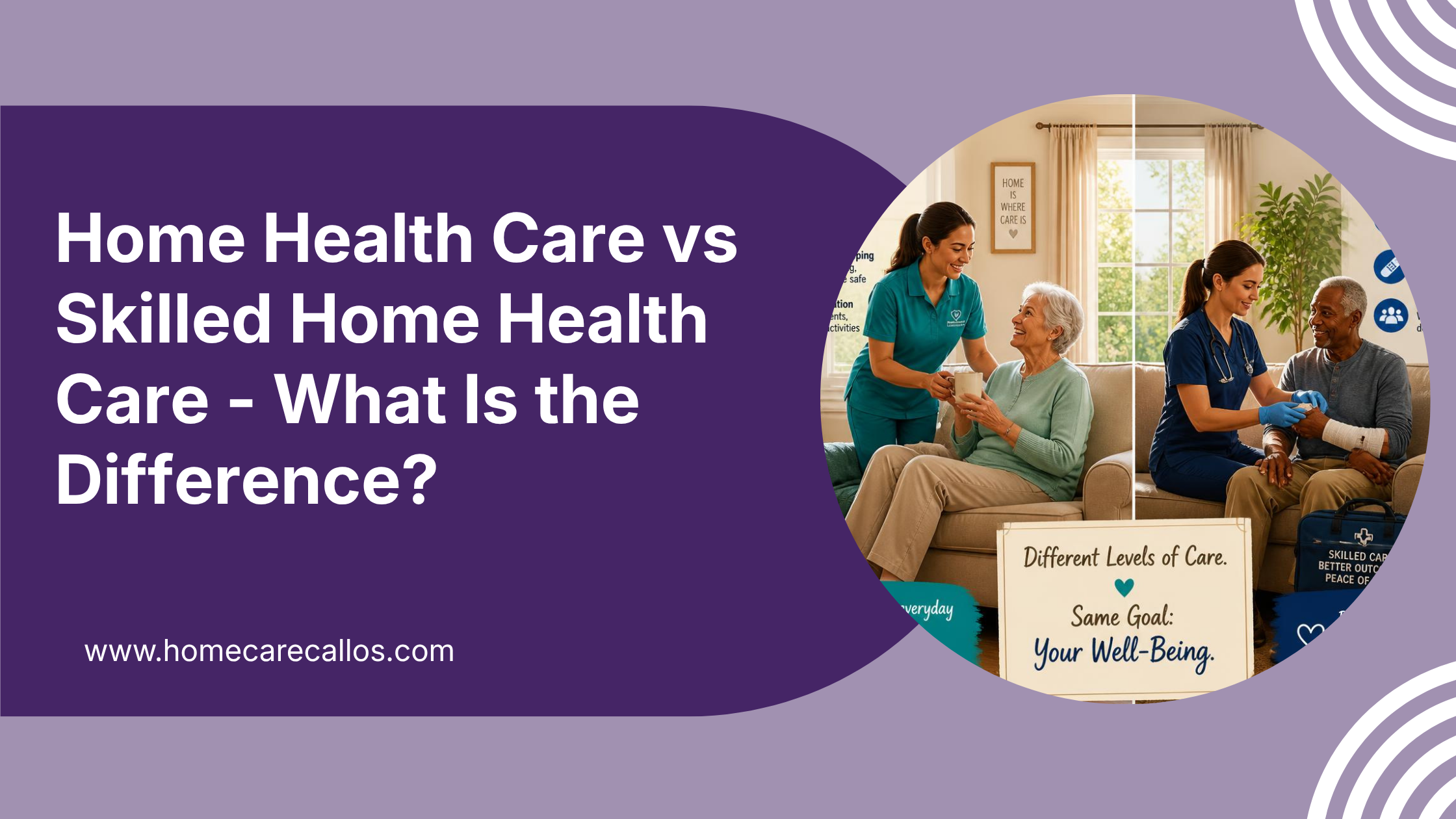
Home health care is often used as a broad phrase for support provided at home. Skilled home health care usually means clinical care ordered by a medical provider and delivered by licensed professionals, such as nurses or therapists. Non-medical home care focuses on daily living support, personal care, homemaking, safety, and routine help at home. Understanding the difference helps families choose the right level of care without overpaying or leaving important needs unmet.
Families often start searching for help after a hospital stay, a fall, a new diagnosis, or a noticeable change in daily routines. The terms can get confusing fast. One website may say home care. Another may say home health care. A hospital discharge planner may mention skilled services. Insurance may use even more specific language.
We understand how stressful this can feel when you are trying to make the right decision for a parent, spouse, or loved one. The simplest way to look at it is this: some care helps with daily life, and some care treats a medical need. Both can be valuable. They are just not the same.
This guide explains the difference between home health care vs skilled home health care, what each type of support may include, and when families in Canton and Northeast Ohio should consider calling for help.
What Home Health Care Usually Means
In everyday conversation, many families use the phrase home health care to describe any type of care received at home. That may include help with bathing, dressing, meals, errands, light housekeeping, medication reminders, mobility support, companionship, or supervision. In that broad sense, home health care simply means support that helps someone remain safer and more comfortable at home.
From a care planning standpoint, it is important to separate non-medical home care from clinical care. Non-medical care is usually provided by trained caregivers or home health aides. These caregivers help with daily tasks that may have become hard, unsafe, or tiring. The goal is to protect comfort, dignity, and routine while supporting independence.
For example, Home Care by Callos provides in-home support through trained caregivers across Northeast Ohio, including Canton, Cleveland, and Youngstown. Families may use services like personal care services, homemaking services, respite care, overnight care, dementia support, and other practical services that help daily life run more safely.
- Bathing, grooming, dressing, and toileting assistance
- Meal preparation, light housekeeping, and laundry support
- Companionship and supervision
- Mobility reminders and fall risk awareness
- Caregiver relief for family members
What Skilled Home Health Care Means
Skilled home health care is different because it involves medical or therapy services that must be handled by licensed healthcare professionals. These services are commonly connected to recovery, disease management, wound healing, therapy goals, or monitoring after an illness, injury, surgery, or hospitalization.
Skilled care may include nursing visits, physical therapy, occupational therapy, speech therapy, wound care, injections, IV therapy, education about a medical condition, or monitoring for unstable health concerns. In many cases, skilled home health care requires a doctor, nurse practitioner, or other approved provider to order the care and create a plan of care.
Medicare describes covered home health services as certain home-based services for people who are eligible. Covered examples may include part-time or intermittent skilled nursing care, therapy services, medical social services, and home health aide care when it is tied to skilled care. Medicare also notes that it does not pay for 24-hour-a-day care at home, meal delivery, homemaker services unrelated to the care plan, or personal care when that is the only care needed.
The Main Difference Is Medical Need
The biggest difference is whether the person needs hands-on daily support or licensed clinical care. Non-medical home care helps someone get through the day safely. Skilled home health care treats or manages a medical issue.
Here is a simple way to think about it:
- If your loved one needs help bathing, dressing, eating, moving around, or keeping the home safe, non-medical home care may be the better fit.
- If your loved one needs wound care, therapy after surgery, injections, or clinical monitoring, skilled home health care may be needed.
- If your loved one needs both, the two care types can often work together.
A person recovering after surgery may receive skilled therapy for a limited period while also needing help with meals, bathing, and safe movement between visits. In that case, post-op care can support the daily routine while clinical providers handle medical treatment.
When Home Care May Be Enough
Home care may be enough when the main challenge is daily living, not a skilled medical task. Many families first notice small changes. Laundry piles up. Meals become inconsistent. A loved one starts wearing the same clothes repeatedly. The home feels less organized. They may be lonely, unsteady, or nervous when left alone.
These signs matter because daily tasks can affect health and safety. Poor nutrition, missed hygiene, clutter, and isolation can all increase risk. A trained caregiver can provide steady support while helping the person keep as much independence as possible.
Home care may be appropriate when your loved one needs:
- Consistent help with personal care routines
- A safer morning or evening routine
- Light housekeeping and meal support
- Companionship during the day
- Family caregiver relief
- Supervision during higher-risk hours
When Skilled Home Health Care May Be Needed
Skilled home health care may be needed when there is a medical condition that requires licensed care. This is common after a hospital discharge, surgery, serious illness, or a change in health status. A physician or qualified provider may recommend skilled care when the person needs clinical monitoring, treatment, or therapy at home.
Examples may include wound care after surgery, therapy to regain strength, medication-related clinical education, monitoring after a serious illness, or support for a condition that is unstable. These services are usually goal-based and may be temporary. The care plan often focuses on recovery, improvement, maintenance, or slowing decline.
If you are unsure whether a need is medical or non-medical, ask the discharge planner, physician, or care coordinator. This is general information and not medical advice. Always confirm clinical decisions with a licensed healthcare provider.
How Payment Often Differs
Payment can also differ. Skilled home health care may be covered by Medicare or certain insurance plans when eligibility rules are met. Coverage usually depends on medical necessity, provider orders, homebound status, and whether the services are part-time or intermittent.
Non-medical home care is often paid privately, through long-term care insurance, Medicaid waiver programs, veterans benefits, or other approved programs. Each family situation is different. Home Care by Callos can help families review available options without making the process harder than it needs to be.
Depending on the situation, families may want to review private pay care, long-term care insurance, Medicaid PASSPORT Waiver support, or Veteran Aid & Attendance options.
Can Someone Use Both Types of Care?
Yes. Many families use both types of care at different points. A skilled home health agency may send a nurse or therapist for clinical visits. A non-medical caregiver may help between those visits with bathing, meals, safety, homemaking, companionship, and routine care. This can reduce gaps in the day and give family members more peace of mind.
For example, a therapist may visit a few times per week after a hospital stay. That does not always cover the daily help a person needs in the morning, evening, or overnight. A caregiver can support the home routine while the clinical team handles the skilled treatment plan.
For families who need extended coverage, 24-hour home care or overnight support may help keep the home setting safer and more consistent.
Choosing the Right Support
The right choice depends on the person’s condition, safety risks, daily needs, and medical instructions. Start by writing down what is actually happening at home. Is the main issue bathing, meals, and supervision? Or is the person dealing with wounds, therapy goals, injections, or unstable symptoms? The answer will point you toward the right type of care.
You do not have to figure it out alone. Home Care by Callos can talk through daily support needs and help families understand when non-medical home care may be appropriate. If the concern is clinical, the next step should involve the physician, discharge planner, or licensed medical provider.
Call Home Care by Callos at (330) 499-1299 to discuss care options in Canton and Northeast Ohio. You can also reach the team at info@homecarecallos.com or visit the Canton office at 4486 Dressler Road NW, Canton, OH 44718.
Frequently Asked Questions
Is home health care the same as skilled home health care?
Not always. Families often use home health care as a broad phrase for help at home. Skilled home health care usually refers to clinical services from licensed professionals, such as nurses or therapists, under a medical plan of care.
What is considered non-medical home care?
Non-medical home care includes help with daily routines such as bathing, dressing, grooming, meals, homemaking, companionship, mobility support, and supervision. It does not replace licensed medical care.
Who orders skilled home health care?
Skilled home health care is usually ordered by a physician, nurse practitioner, or other qualified provider. The care must often be tied to a medical need and a formal plan of care.
Can Home Care by Callos help after surgery?
Yes. Home Care by Callos offers post-op care support for daily routines at home. Clinical needs such as wound care, injections, or therapy should be handled by licensed medical professionals as appropriate.
How do I know which care option my loved one needs?
Look at the main need. If the need is daily living support, home care may be the right fit. If the need is medical treatment or therapy, skilled home health care may be needed. A doctor or discharge planner can help confirm clinical needs.